MATRI carries a living lineage of Rāja Yoga — the crown-jewel discipline the old texts call the king of all yogas — into the one place it was always meant to be applied: how we actually live the alignment between thought, action, and human ecology.
Books
Amazon Australia Bestselling Author of THE SPINE
#3 Hindu Sūtras
#6 Hinduism
#8 Indian Philosophy
13 October 2026
One holds you. One takes you.
THE SPINE is the map of the discipline. MYST · MEGHA · MYTH is one woman walking it — and the record of what the walking cost.
THE SPINE
Classical Rāja Yoga and the Yoga Sūtras of Patañjali, in eighteen chapters of ordinary language. Nine climb. Nine come back down.
“Every walk of any consequence begins the same way: standing still, at the edge of the terrain, while somebody tells you the truth about what is ahead.”
0:00 / — · Prologue — At the Trailhead
MYST · MEGHA · MYTH
Three books. A woman of forty who has been burning in her sleep since she was thirteen, and a girl in a garden in France in 1425. With thirty-six plates by Nicholas Roerich.
“Madam, you are not ill. You are unrelieved.”
0:00 / — · Book One — The Ascent
THE SPINE — the audiobook, read in full. Eighteen chapters walking the classical map of Rāja Yoga, in ordinary language. Paperback and hardcover are out now.
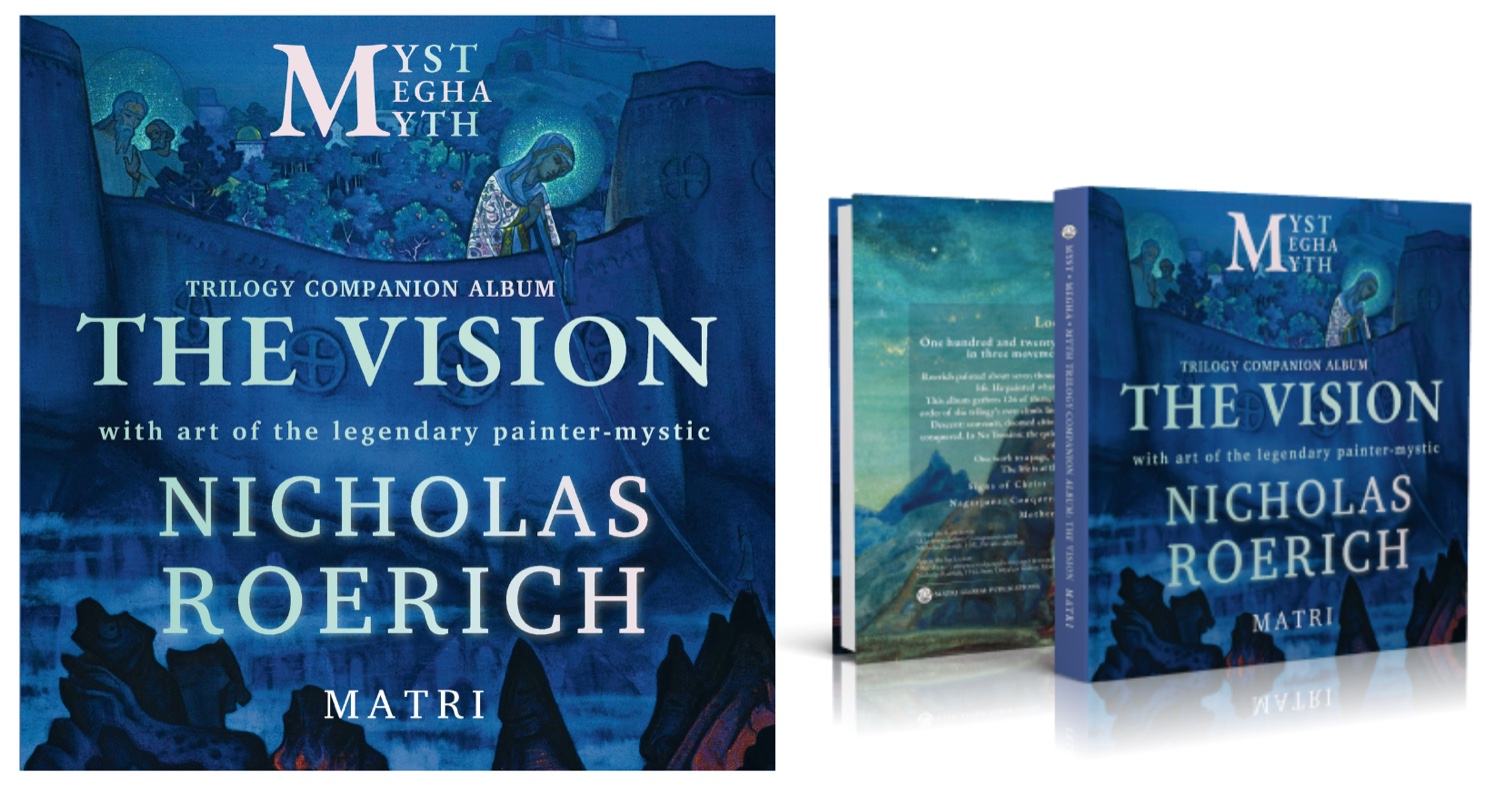
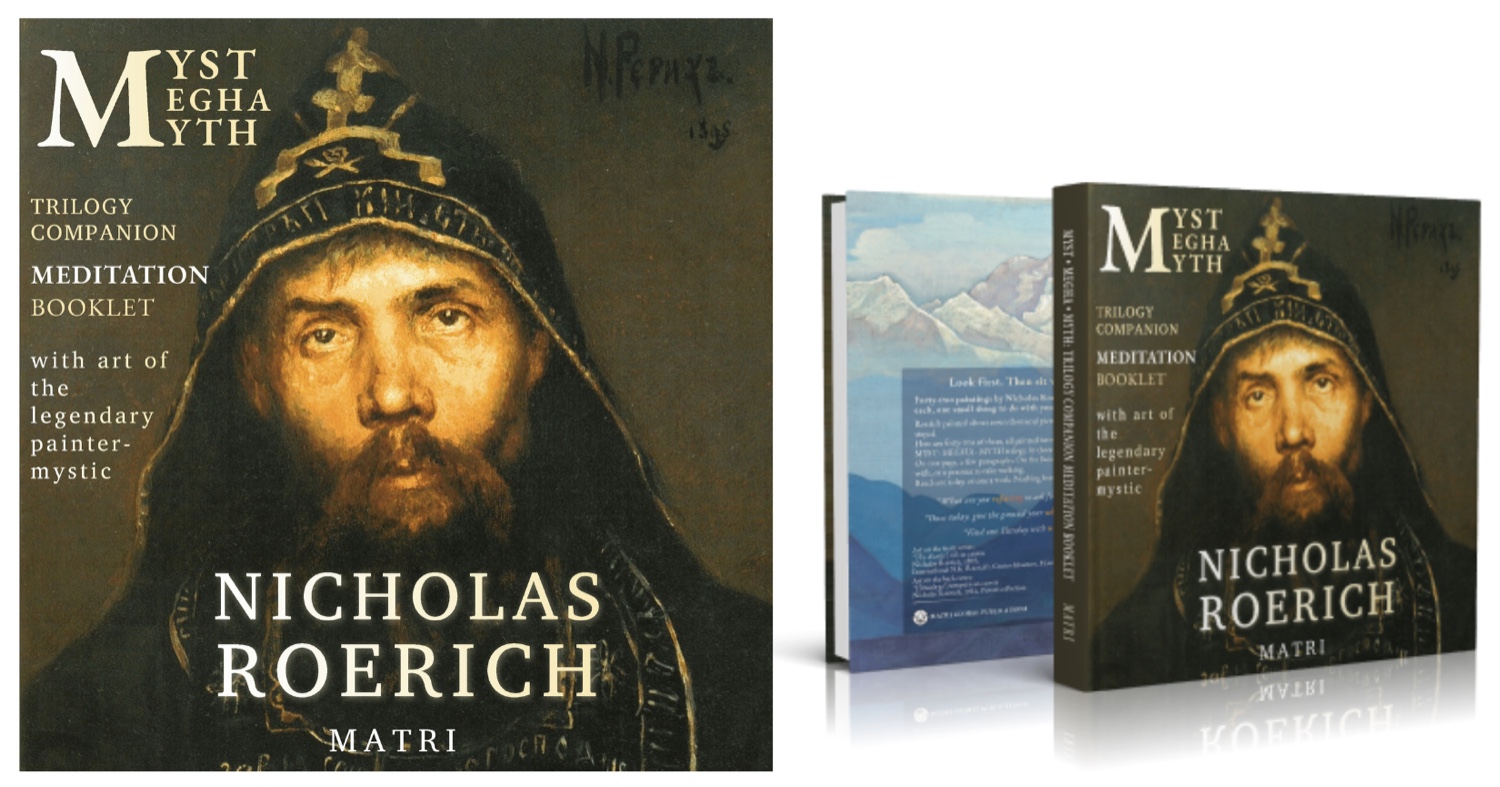
The Roerich companions — two volumes
Part of MYST · MEGHA · MYTH · premium colour throughout · The Vision 144 pages, Meditation Booklet 96 · 8.5 × 8.5 in · paperback matte, hardcover in gloss case laminate
The Vision126 full-colour plates across 144 pagesMeditation Booklet42 plates, one to a spread, with the practice
by Leslie Kingsley — painter, Sanskrit scholar and Acharya (Heartaloft)
The idle lament of the modern human – of being equipped with a fully functional body but without an operating manual - is a needlessly futile complaint. That knowledge is there - coded and concealed deep within us but drowned by the demanding cacophony of the mind and demands of contemporary life. Written manuals have been with us since the ancient masters, seers and ṛṣis siphoned the knowledge from deep within the silence. The information is there, but obscured by the baubles and clutter that demand our attention and distracts our focus. For that knowledge to become audible, visible, accessible above the ceaseless motion-picture blur of material existence, requires dedicated attention. Often a dedicated focus born from response to illness, sudden loss, grief, or trauma - or simply from the determination to seek.
We find traces of it the Taoist text “Taiyi Jinhua Zongzhi” (the Secret of the Golden Flower) where our focus is invited to turn in upon the self. It speaks to us through the remnants of the ancient mystery traditions, and through meditative attention we can discern it within the lesson of “The Parable of the Sower” related by the Galilean master. We are enveloped by it in the profound Prajñāpāramitāhṛdaya (the Heart Sūtra) of Mahayana Buddhism. But this wisdom takes its most universally potent form within the tradition of Sanatana Dharma with its Vedas, Upaniṣads, Itihasas and Puraṇas.
The path that beckons the reader through the pages of “The Spine” is a transformative one. Crafting wheel ruts that lead the reader to glimpses of the workings of the mind and its relation to the ineffable self, the author elicits a sapient utilisation of the states of consciousness (as expounded in the text appended to the Atharva Veda - the “Maṇḍukya Upaniṣad”), and alchemically infuses these serviceable concepts into a palatable, easily-relatable form. Skilfully weaving these elements to create a useful unravelling of our more pedestrian perceptions of consciousness, the author artfully unfolds the veil cloaking the hidden nature and mechanics of our emotional reactions and perceptual responses. With a disarming ability to see what-is-what and to plainly say so – she provides an incisive no-nonsense dealing with the quirks and complexities of human perception.
The whole reads easily, like a story – but no glib tale here - rather, a revelatory repast - to be inhaled, savoured, digested and ultimately revisited. Each chapter, so easily understood, acts upon the mind like a furtive paring knife, peeling back our every assumption and dispelling every misconception to expose the silent obscure machinery that balances our core sense of well-being and ultimately laying before the reader the tools and means, providing the opportunity to beneficially transform one’s perceptual engagement with reality.
The keyhole-like glimpses afforded by the selection of monotone snapshots give the appearance of blissful engagement with life - while the contrasting diary notes offer intimations of the trials and tribulations that attended the honing of the author’s perception and refinement of her topic.