MATRI carries a living lineage of Rāja Yoga — the crown-jewel discipline the old texts call the king of all yogas — into the one place it was always meant to be applied: how we actually live the alignment between thought, action, and human ecology.

Bio
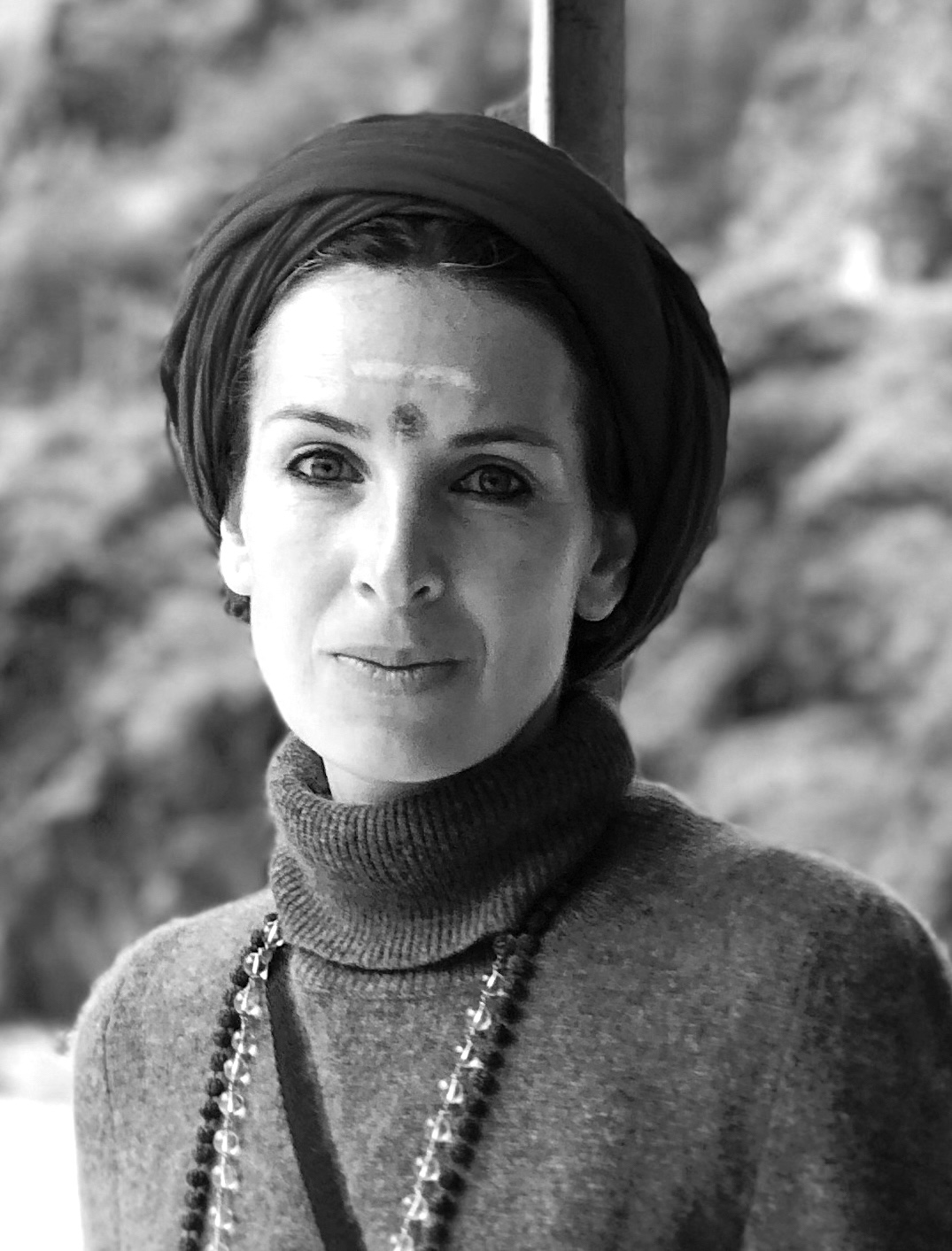
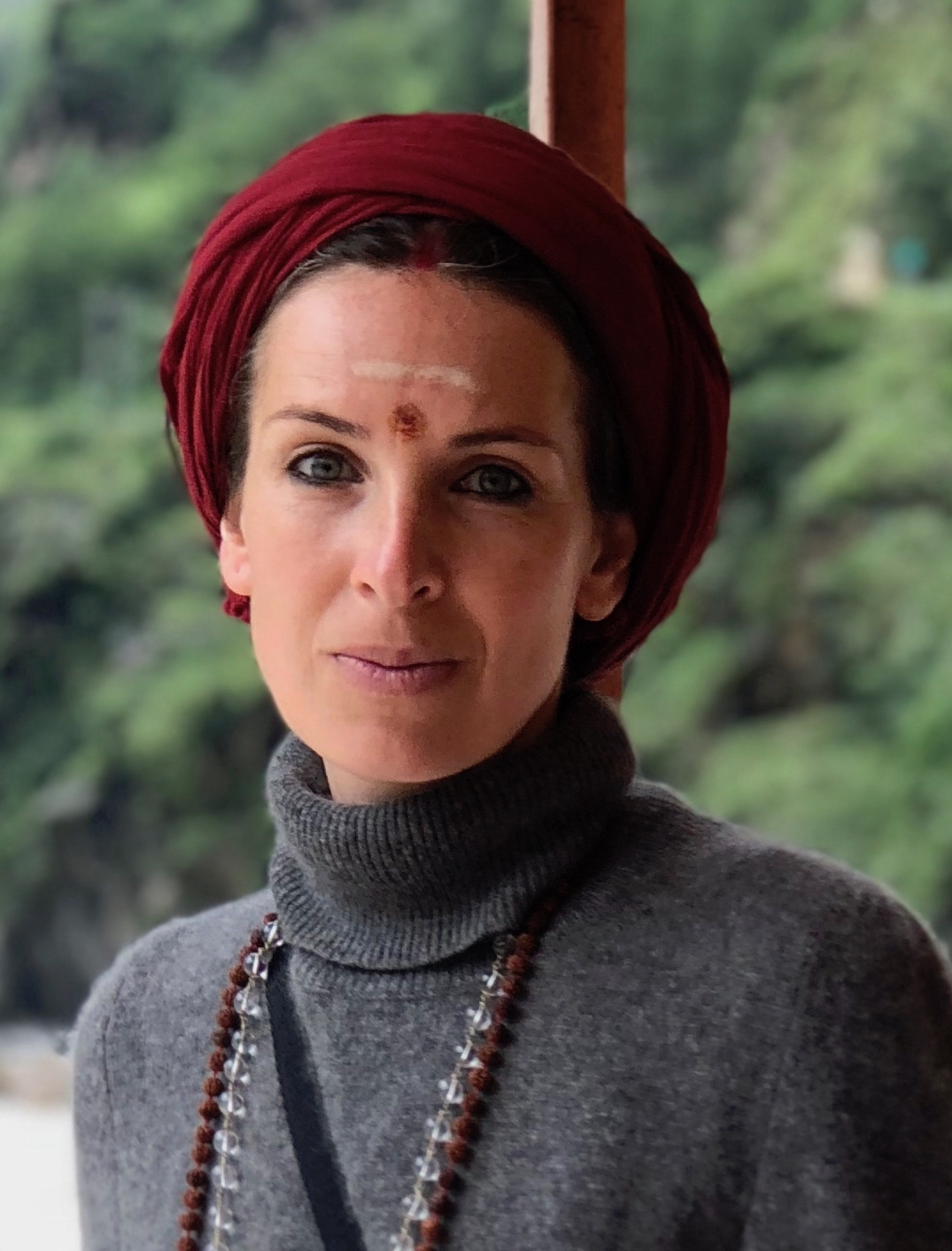
Yoga re-wires nervous pathways, re-patterns entrenched self-sabotage and stops the habit of giving our power away. It brings power back to where it belongs.
We have to be capable of owning our Self. Embodied integrity and inner authority are built on two things: resilience, and full alignment with our own inner reality." (Matri)
Matri is the mother of three, a teacher and a student of Rāja Yoga, deep perennial wisdom traditions and the living Earth — as one practice — for more than thirty years. What she teaches is mindfulness, order and fire, and across fourteen books she has written it three different ways. She builds the portal that carries this primordial fusion.
She was born in Palekh, the old Russian village where people paint whole worlds on boxes smaller than your hand, and grew up from the age of two in Kyrgyzstan, a country made mostly of mountains. Half her childhood was spent with her grandmother on the far side of the continent, in Kamchatka, a land of volcanoes, who fed her books by the thousand — and at fifteen handed her Nicholas Roerich. She could not grasp him then; she grew into him over the years — the most profound śaktipāta of her life, given through a grandmother’s library.
She studied the history of civilisations, with Central Asia her field. The yoga books began gathering at fifteen, and she has walked the path since. India first received her at twenty-five; it took the move to Australia to close the circle, and home, when it came, was India — which had lain just over those mountains the whole time.
She teaches Rāja Yoga, which draws on several disciplines — psychology and sociology among them. Yoga as the ecology of an individual, and ecology as the yoga of the collective. Dharma is uninterrupted alignment, and alignment is the measure of success in life. Not one joule of Śakti has to be wasted.
She writes and records in English, and teaches internationally. Her recorded talks are free — MatriTalks, wherever you listen — and the audiobooks appear on major platforms as they are published. She does not think children need a smaller version of the truth. She thinks they need it in words they already have.
Fourteen books: THE SPINE, the MYST MEGHA MYTH trilogy and its omnibus, ZENVOYAGE — eight full-colour illustrated books — and the two Roerich companions, The Vision and the Meditation Booklet.
Across everything Matri writes there is one presence, and she is not a character: knowledge, the law, and the fire at the root. Throughout all times she has been written over, split in two, renamed and credited to men who never travelled — and has not once stopped arriving. Matri’s books return the credit.
Orientation
Yoga is ecology of an individual.
Ecology is yoga of the collective.
Turn awareness inward and the body begins to heal. Turn it outward — toward soil, toward community, toward the way a household runs — and the same thing happens in the environment. The discipline is identical: observe consequence, reduce reactivity, act from what we can actually see. Left unexamined, impulse hardens into pattern. Pattern shapes environment — in a body, in a culture, on the land. Traditional cultures of Golden Age understand this. Their restraint and rhythm are not morality. They are applied intelligence.
Dharma is uninterrupted alignment, and alignment is the measure of success in life.
Flux is constant. This is where Rāja Yoga begins — not as philosophy, but as protocol. Clean inputs, steady rhythm, trained attention. The physiology recovers. Clarity returns. Memory sharpens. Stamina rebuilds. And from that ground, right action stops being an effort and becomes natural.
यतो धर्मस्ततो जयः
Yato dharmas tato jayaḥ
(Bhīṣma Parva 6.63.29, Mahabharata)
Alignment is not belief. It is coherence we can feel — between what we see, what we think and what we do.
That is the framework Matri's teaching works to restore.
Watch
Short teachings on Rāja Yoga, yoga psychology, and the science of un-hooking the mind. Channel: Matri Talks — Mātṛ Pravachan.
2-min Pravacana (Sanskrit: प्रवचन) Shorts.
Dissecting the Demon — a 5-part series.
Fire Digests Everything — a 9-part series.
Lie Down. Let the Nervous System Rest.
The full guided Yoga Nidrā — for sleep, recovery, and trauma.
Listen
Guided meditations and Yoga Nidrā for sleep, recovery, and trauma — to practise lying down, eyes closed, in your own time. New practices added now and then.
Read
Articles, translations, and teachings on yoga, ecology, Sanskrit, and native wisdom — published on the eco-yoga portal. Click any title to preview; open the full piece on the portal.
Training
Matri carries a living lineage of Rāja Yoga — the crown-jewel discipline the old texts call the king of all yogas — into the one place it was always meant to be applied: how we actually live the alignment between thought, action, and human ecology.
What follows is not learnt from books. It is transmitted teacher to student, body to body — and continues to unfold long after the teaching appears to end.
The traditions listed below are the root — the original science from which everything the modern world calls mystical, spiritual and religious was drawn and, over centuries, diluted. These are the uninterrupted lineages Matri was trained in:
Śrī Vidyā & Siddha Dikṣā/Upāsanā
- Śrī Satyasaṅgānanda Sarasvatī, disciple of Paramahaṁsa Satyananda Sarasvatī
- Śrī V Ravi (Śrī Ānandānandanātha), disciple of Śrī Satyajītānandanātha (Desikachariyar)
- Śrī Nikhileshwaranand (Dr. Narayan Dutt Shrimali), disciple of Swami Sachchidanand of Siddhāśrama (Gyangunj)
Śāstra
- Śrī Vidyā (Kādi)
- Nātha–Siddha traditions (North & South)
- Sāṃkhya, Advaita Vedānta, Vedas & Upaniṣads
- Śaiva–Śākta Tantra, Trīka/Śaiva Siddhānta
Matri offers a small number of private one-to-one trainings each year for serious students. Apply or enquire via email.
20% off your first session
Plus permanent 20% off all sessions for every student you refer.